The graphic hoodie has quietly become one of the most-worn pieces in casual wardrobes because it sits at the meeting point of comfort, style, and personal expression, which is exactly what most people want from their everyday clothes. A good graphic hoodie can carry an entire outfit while feeling like nothing more than pulling on your favorite top in the morning. The challenge is finding the ones that actually work, since the market is full of graphic hoodies that often fall short in one way or another.
Some have great designs on cheap fabric, while others have solid construction with graphics that look like clip art. The best ones get both parts right, and here is what makes a graphic hoodie worth wearing along with how to build a small collection that covers your casual style needs.
What Makes a Graphic Hoodie Work
Not every graphic hoodie belongs in a wardrobe, and the ones that stick around for years share a few traits that separate them from throwaway pieces.
Fabric Weight & Feel
The base of any good hoodie is the fabric, so look for heavyweight cotton around 400 GSM or higher if the brand lists the specification. This weight gives the hoodie structure, allows it to hang well on the body, and ensures it lasts through years of regular wear.
Ringspun cotton is smoother and stronger than standard cotton, while combed cotton takes it a step further by removing the shorter fibers that cause pilling. If the tag mentions either of these terms, that is a good sign.
Fleece-back interior fabric is what gives hoodies their warmth and softness, and better fleece stays soft after many washes, while cheaper versions turn patchy and rough within a few months, which defeats the purpose of the piece.
Print Quality
The graphic itself needs to hold up, and screen printing is the standard for large front and back designs because it costs more to produce but stays sharp for the life of the garment. Heat transfer prints crack and peel after a few dozen washes, which is why cheap graphic hoodies end up looking worn out after one season.
Embroidered graphics are the most durable option, adding texture to the piece and essentially never wearing out, which makes embroidery hard to beat for smaller designs on the chest or sleeve. Puff prints and specialty techniques can look great, but their longevity varies, so it is worth asking about the print method before spending real money on a piece.
Fit & Cut
The current standard leans oversized, with boxy cuts and dropped shoulders that let the graphic sit flat and give the hoodie a modern silhouette. Slim fits pull graphics out of proportion and look dated. The shoulder seam should sit below your actual shoulder, the body should hang straight without bunching, and the sleeves should reach past your wrists so you can push them up if you want. If you are between sizes, go up, because oversized reads as intentional while too-tight looks like you outgrew the piece.
Styles That Work for Casual Outfits
Different graphic hoodies suit different outfits and moods, and building a small collection with a few styles covers most situations.
Solid Base With Chest Logo
A hoodie in a neutral color with a small embroidered logo on the chest is one of the most versatile pieces you can own because it works under jackets, over tees, and with almost any pants. The graphic adds enough personality to keep the piece interesting without dominating the outfit. Faded black, cream, brown, olive, and washed navy are the colors that work hardest, while bright colors work but commit the outfit to a specific direction.
Bold Back Print
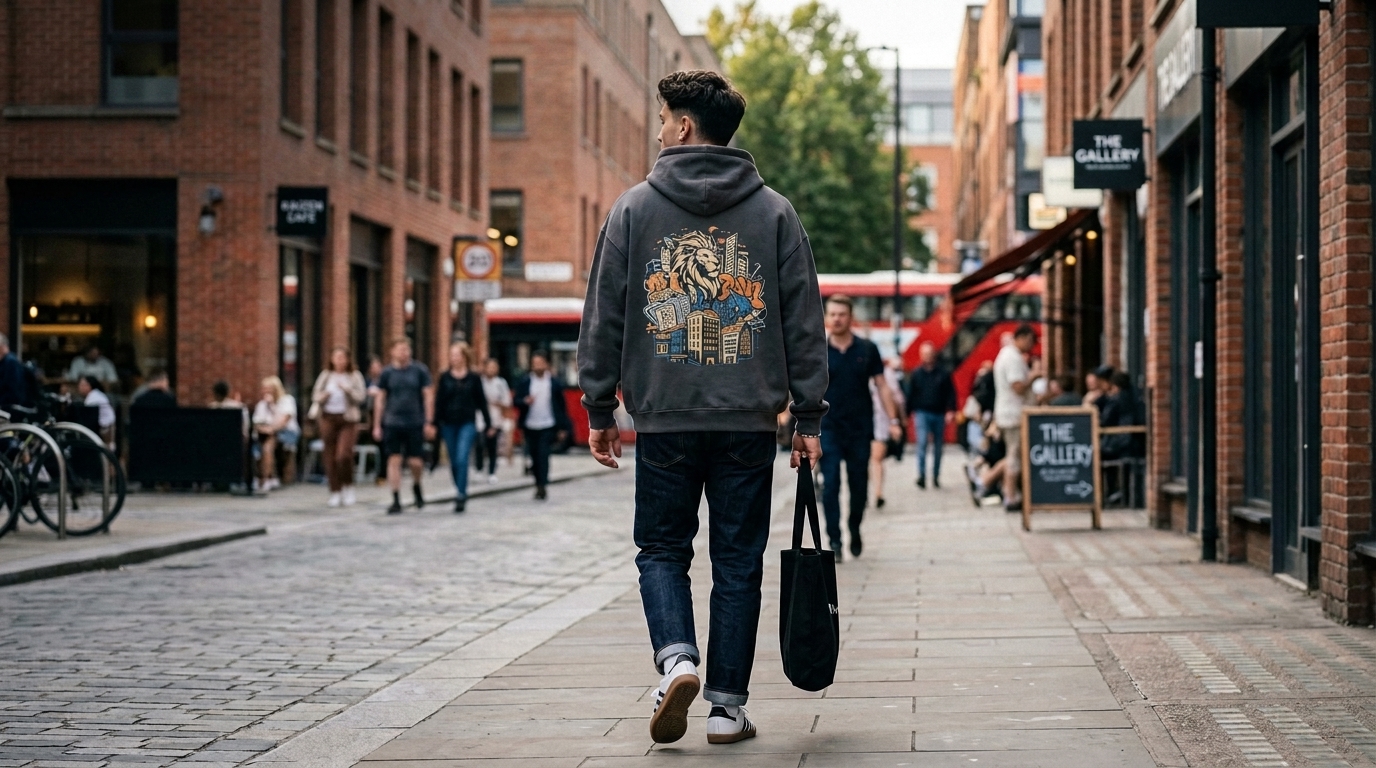
Hoodies with a large back print are a different tool since the graphic does not show when you are facing someone but makes an impression when you walk away. These work well for outfits where you want a piece that adds visual weight without being loud from the front. Back prints let you go bigger with the design because the space is larger, and city references, artwork, and typography all land well on back prints.
Front Print With Meaning
A front print hoodie makes the graphic the focus of the outfit, which is why the design really matters. Generic prints on the front feel corny, while prints that reference something specific, such as a city, a scene, or a piece of art, land much harder. If you are wearing a front print hoodie, keep the rest of the outfit simple with plain pants, clean sneakers, and no other loud pieces so the hoodie can do the talking.
Pullover vs Zip-Up
Pullover hoodies feel more casual and let the graphic stay clean across the front, while zip-ups split the design and give a slightly dressier look. Both work for different situations, but for pure casual outfits pullovers are the default, and for layering under jackets or over collared shirts zip-ups provide more options.
Colors That Age Well
Some colors on graphic hoodies feel dated quickly, while others stay looking right for years, and knowing the difference saves you from pieces you stop wearing after a season.
Faded and washed tones outperform bright saturated colors, since a washed brown hoodie will still look intentional in five years while a neon green one probably will not.
Neutrals like cream, sand, faded black, and washed navy pair with almost any pants and other layers, making them the base of any collection.
Earth tones like rust, sage green, and muted mustard add color without shouting, which works well for people who want more personality than pure neutrals but do not want to commit to bright colors.
Bright saturated colors work for specific outfits and personalities, so if you love wearing color go for it, but understand these pieces are less flexible across your wardrobe.
How to Style Graphic Hoodies
The graphic hoodie is easy to wear, but a few styling choices push outfits from decent to sharp. The default outfit is loose jeans and clean sneakers, with straight-leg or wide-leg jeans in a dark wash or mid wash working best, while skinny jeans clash with the oversized cut of modern hoodies. Let the hoodie sit at hip length or slightly below, and tuck it in at the front if you want a bit more definition, though full tucks read too dressy for a hoodie outfit.
Layering a graphic hoodie under a chore jacket is one of the strongest casual moves right now because the hoodie adds warmth and texture while the jacket adds structure and polish. Pick a hoodie color that either matches or contrasts intentionally with the jacket, since random mismatches look accidental. Cargo pants and loose chinos give a hoodie outfit more visual interest than jeans, as the pockets and loose cut match the relaxed energy of an oversized hoodie, and keeping the color palette tight makes the look more considered. Wearing a hoodie over a long sleeve tee lets the cuffs and hem of the tee show, which adds a layered look without extra pieces, and the tee should be a solid color that either matches or contrasts cleanly with the hoodie.
What to Avoid
A few common mistakes kill graphic hoodie outfits. Too many loud pieces at once create conflict, so if the hoodie has a bold graphic keep the pants and shoes simple. Cheap thin fabric makes a graphic hoodie look worse than a plain heavyweight one, so skip the graphic if the fabric is not there. Overly trendy graphics feel dated in a year, while graphics with personal meaning or cultural weight last much longer. Wrong sizing is another issue, since too tight looks like you shrunk the hoodie and way too big looks like a costume, so aim for one size above your usual for the current oversized cut.
Care Tips
Wash hoodies cold because hot water fades colors and cracks prints. Wash them inside out to protect the graphic from friction against the drum. Skip the dryer if possible, since air drying keeps the fit and the print looking better for longer. Never iron directly on the graphic, and instead turn the hoodie inside out or use a cloth between the iron and the print.
Final Thoughts
The graphic hoodie is one of the easiest ways to add personality to a casual wardrobe without overthinking it, and a small collection of three or four good pieces covers most situations while giving you options across colors, weights, and design intensity. Start with a solid neutral hoodie with a small chest graphic, add a back print piece in a color you like, and round it out with a front print hoodie that means something to you. Those three pieces alone can carry months of casual outfits. Focus on heavy fabric, quality printing, and designs that connect to something real, while skipping the trend pieces and the cheap fabric. The hoodies that stay in rotation for years are the ones built with intention.