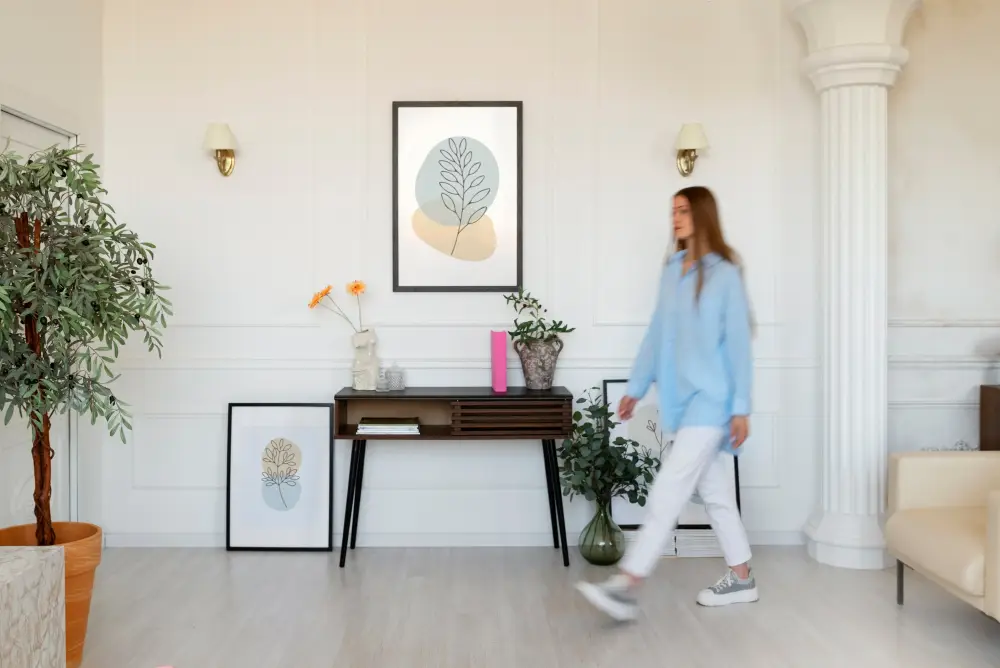
Walls are usually the last thing people think about when they move into a place. The furniture goes in, the boxes get unpacked, and then six months later half the rooms still have bare walls or random posters left over from college. The walls end up looking unfinished even when the rest of the room is done.
Minimalist wall decor solves this without taking over the room. The whole point is to add just enough to make a space feel intentional, not to fill every empty square foot with art.
Here’s how to actually do it well, what to pick, and where to put it.
What Minimalism Actually Means in a Room
Minimalism gets misunderstood as bare. People hear the word and picture empty white walls with maybe one frame in the middle. That’s not really what it is.
Minimalism in decor is about removing what doesn’t need to be there so the things that stay can be seen properly. A room with one strong piece of wall art on a clean wall hits harder than a room with eight competing pieces fighting for attention.
The goal isn’t less art. It’s less visual noise around the art so each piece can actually do its job.
Picking the Right Pieces
The art you choose sets the tone for the entire room. With minimalist decor, you’re not trying to make a statement with every wall. You’re picking pieces that hold the room together without shouting.
Line Art
Line art is one of the most popular options for minimalist walls right now and for good reason. A single-line drawing of a face, a figure, or an abstract shape uses almost nothing visually but still gives a room a focal point.
The beauty of line art is that it works with almost any color scheme because the design itself is so simple. Black lines on a white background, or white lines on black, fit into living rooms, bedrooms, and even kitchens without clashing.
Look for pieces with hand-drawn quality. Mass-produced line art often looks too clean and lifeless. The slight imperfection in a real hand-drawn piece gives it character.
Single Color Prints
A print that uses one or two colors against a neutral background does a lot of work in a minimalist room. Think of a deep navy poster with white text, or a soft beige print with a single bold shape.
These work well as accent pieces in rooms with neutral walls. They add a touch of color without disrupting the calm of the space.
The trick is matching the color to something else in the room. If your couch has a navy throw pillow, a navy print on the wall pulls the room together. If nothing else in the room shares that color, the print floats by itself and looks out of place.
Black & White Photography
Photography in black and white sits comfortably in minimalist rooms because the missing color forces the eye to focus on shape and composition instead. A photograph of a building, a coastline, or even just a single tree becomes more graphic without color.
The frames matter here. Thin black or natural wood frames let the image speak. Thick, ornate frames pull the eye away from the photo and ruin the effect.
Larger black and white prints can carry an entire wall on their own. A 24 by 36 inch piece above a sofa or bed doesn’t need to be surrounded by other art to feel complete.
Where to Hang the Pieces
The right piece in the wrong spot still looks off. Placement is half the work.
The main rule most people miss is hanging height. Art should sit at eye level when you’re standing, which usually means the center of the piece is about 57 to 60 inches from the floor. This is the same height most museums use. Anything higher feels disconnected from the room. Anything lower feels accidental.
Above furniture, the bottom of the frame should sit about 6 to 8 inches above the top of the couch or headboard. Closer than that and it looks cramped. Further than that and the art floats with no relationship to the furniture below.
For a hallway, a single piece on a long wall draws the eye through the space. Multiple smaller pieces can feel cluttered in a narrow area.
Spacing & Grouping
When you do want more than one piece on a wall, the spacing between them changes everything.
For two pieces on the same wall, leave about 3 to 5 inches between them. They read as a pair instead of two separate decisions.
For a grouping of three or more, line them up either by their tops, their centers, or their bottoms. Picking one of those three reference points and sticking with it creates order even when the pieces themselves are different sizes.
The wall around the grouping needs breathing room. A pile of frames packed into a corner with no empty space around it loses the minimalist effect entirely. Keep at least a foot of clear wall around the outside of any grouping.
Frames & Finishes
The frame is part of the art piece, even when you’re not paying attention to it. A great print in a cheap plastic frame loses some of its impact.
For minimalist styles, three frame choices work most often.
Thin black metal frames give a modern, clean look that works in most rooms. They’re affordable and they don’t compete with the art inside.
Natural light wood frames soften the look and pair well with warm neutrals, plants, and any room with wood furniture. Oak and ash are common choices.
Frameless mounts, where the print is set onto a board or acrylic without any visible frame, give the cleanest possible look. These work especially well for photography and large color blocks.
Avoid mixing frame styles in the same room if you can help it. Three different frame types on three different walls creates visual chaos that breaks the calm minimalism is supposed to create.
Common Mistakes
A few patterns show up over and over when minimalist wall decor doesn’t work.
Hanging too small. A 5 by 7 inch print on a huge empty wall looks lost. Scale the art to the wall and the furniture below it. As a rule of thumb, art above a couch should be about two-thirds the width of the couch itself.
Going too symmetrical. A piece set dead center directly over a dead-center couch can look static. Slight offset feels more natural and lived-in.
Mixing too many styles. A line drawing next to a watercolor next to a photograph next to a typographic print pulls in too many directions. Pick a style and let it be the language of the room.
Forgetting the wall color. White walls show off art well, but they also expose any flaws. If your walls are off-white, beige, or gray, the art needs to work with that base, not against it.
Hanging only above furniture. Walls without furniture below them often get ignored. A small piece on a bare wall section gives the room more balance than leaving any wall completely empty.
Mixing in Greenery & Other Elements
A minimalist wall doesn’t have to mean just art. A small wall-mounted planter, a single hanging vine, or even a simple wood shelf with one or two objects adds depth without breaking the calm.
The rule is the same as with art. Less is more. One large hanging plant near a print does more for the room than five small planters scattered around. The goal is each element having its own space to breathe.
Natural materials like wood, rattan, ceramic, and linen sit well alongside minimalist art. Plastic and shiny synthetic finishes tend to clash with the natural calm of the rest of the room.
How Many Pieces Are Enough
In a single room, two to four wall art pieces tend to be enough for a minimalist feel. More than that starts to push toward gallery wall territory, which is its own style and not really minimalism.
In smaller rooms like a bathroom or a hallway, one piece is plenty. The square footage of empty wall around the art is part of what gives the room its calm.
Living rooms and bedrooms can handle more, but the pieces should relate to each other in some way. Shared color palette, shared style, shared size range. Random pieces collected over time can work, but they need at least one common thread to feel intentional.
Final Notes
Minimalist wall decor is one of the cheapest ways to make a room feel finished. You don’t need new furniture, fresh paint, or a renovation. You need a few well chosen pieces hung properly.
The biggest shift is going from thinking of wall art as decoration to thinking of it as part of the architecture of the room. Once you start placing pieces with intention, the walls do real work for the space instead of just holding it up.
Start with one wall. Pick one piece that you actually like, hang it at the right height, and live with it for a week. The room will tell you what it needs next.