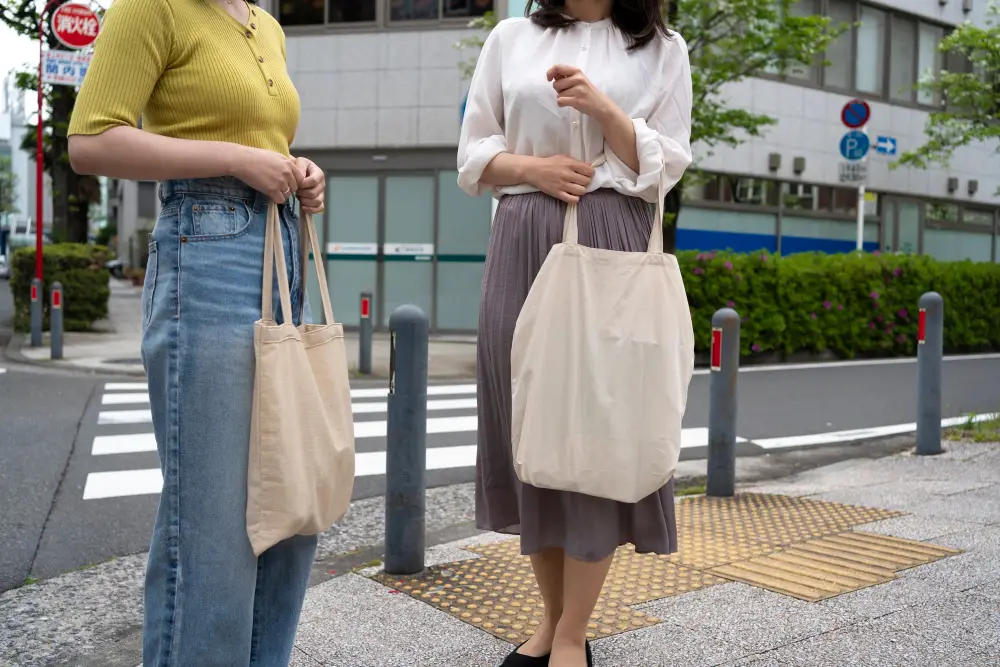
Walk down any street in any city and count the tote bags. You’ll lose track quickly. They’re on the shoulders of office workers, tucked under the arms of students, slung over the backs of parents, carried by people heading to the gym, the market, the beach, or nowhere in particular. The tote went from being a grocery store accessory to one of the most worn bags in the world.
This didn’t happen by accident. The tote bag answered a real problem people had with what they were carrying every day, and once enough people figured that out, it spread fast.
Here’s how the tote took over, why people choose it now, and how to actually wear one well.
A Short History of the Tote
The word tote comes from a much older verb meaning to carry. The bag as we know it now started showing up in the 1940s, originally from a company called L.L.Bean that made an ice bag designed to haul blocks of ice from the car to the freezer. It was canvas, heavy duty, and built to take abuse.
For decades after that, the tote stayed mostly in the practical category. It was the bag people used for groceries, library books, beach trips, and farmers markets. Nobody thought of it as fashion.
That started to shift in the 2000s when art galleries, bookstores, and small museums began giving away branded canvas totes as gift shop merchandise. The bags were cheap to produce, easy to print on, and people kept them. Slowly, the tote became a signal of where you’d been and what you cared about.
By the 2010s, fashion brands started making their own versions. The bag had crossed the line from utility to style.
Why People Switched From Backpacks & Purses
The rise of the tote is partly the fall of other bags. Backpacks have always been practical, but they look juvenile in most adult settings. A grown professional walking into a meeting with a fully loaded backpack still gets a slightly off reaction. Purses, especially structured ones, are formal and limited in space.
The tote fits the middle ground. It carries more than a purse and looks less like school than a backpack. For people who need a laptop, a water bottle, a notebook, headphones, and maybe a change of clothes, the tote handles all of it without looking like a hiking trip.
There’s also the casual factor. Totes don’t try too hard. A canvas bag with simple text or a small graphic feels approachable in a way that an expensive leather handbag doesn’t. For everyday use, most people don’t want to baby their bag or worry about scuffs.
How Totes Fit Into Outfits
The tote works because it goes with almost anything. Different styles of tote pair with different situations.
Casual Day Looks
A standard canvas tote in natural or off-white pairs with jeans and a t-shirt without thinking. The bag fades into the outfit instead of competing with it. If you want a bit more presence, a tote with a printed graphic adds personality without being loud.
Black canvas totes lean a bit more grown-up. They work with darker outfits, layered pieces, and styles that lean closer to streetwear. The same bag will look different depending on what it’s against.
For warmer months, lighter color totes feel right. Cream, soft tan, faded olive. These soften an outfit and pull together pieces that might otherwise feel mismatched.
Office & Commute
A larger tote in canvas or coated fabric carries a laptop, charger, lunch, water bottle, and personal items without strain. The flat shape of a tote actually works better for a laptop than the round shape of most backpacks because the laptop sits naturally against the side panel.
For more business-leaning settings, leather or faux leather totes give the same carrying space with a more polished look. These pair with button-down shirts, dress pants, and casual blazers. The carrying capacity is the same, but the material reads differently in a meeting.
The handle length matters here. Short handles keep the bag tight against the body for crowded transit. Longer handles let the bag hang at hip height, which is more comfortable for longer walks.
Travel
Totes have quietly taken over as personal items for flights. They fit under the seat, hold everything you need for the trip itself, and don’t require any specific size limits because they’re soft sided.
A travel tote should have a zipper at the top, or at least a snap closure. Open totes are fine for daily use but become risky on planes, trains, and busy airports where things can fall out or get reached into.
Internal pockets help more than people realize. A small interior pocket for a passport or phone keeps the essentials separate from the rest of the bag.
Materials That Hold Up
The biggest issue with cheap totes is they don’t last. The handles stretch, the bottom sags, the seams give out. Knowing what to look for in the material makes the difference between a bag that lasts five years and one that lasts five months.
Heavy canvas, usually called duck canvas or cotton canvas, is the standard. Look for weights of at least 10 ounces per square yard. Lighter than that and the bag will start to deform after a few loads.
Reinforced bottoms matter. Some totes have a separate panel sewn into the bottom to keep it flat and prevent stretching. This is the difference between a tote that holds its shape and one that turns into a sack within months.
Stitched handles, not glued or fused, are non-negotiable. The handles are where most totes fail. Double-stitched seams where the handle meets the body of the bag should be visible.
Recycled cotton and organic cotton are showing up more in the tote category. These perform about the same as standard cotton but with lower environmental cost.
For something a step up, waxed canvas adds water resistance without losing the soft handfeel of regular canvas. It also ages well, picking up character over time the way leather does.
Caring for a Canvas Tote
A canvas tote that’s been used hard for a year looks a lot better with simple care than one that’s been ignored.
Spot clean stains as they happen. A damp cloth with a tiny bit of dish soap takes care of most marks if you catch them early. Letting them sit for weeks makes them much harder to remove.
For deeper cleaning, most canvas totes can go in a washing machine on cold with a gentle cycle. Skip the dryer. Air drying keeps the shape and prevents shrinkage. If the bag has leather handles or printed graphics, hand washing is safer.
Store a tote folded flat or hung by the handles. Stuffed into a drawer in a crumpled state, the canvas creases and the wrinkles set in permanently.
If the bag has printed graphics, wash it inside out. This protects the print from rubbing against the drum of the washer.
Why the Tote Keeps Working
Trends in bags come and go. Crossbodies have their moment, then bucket bags, then mini bags, then giant slouchy hobos. The tote has stayed relevant through all of it.
The reason is that it doesn’t try to be a trend. It solves a real problem. People need to carry stuff. They need to carry it without strain, without looking like they’re heading to a campsite, and without spending six hundred dollars on something they might spill coffee on.
The tote does all that. It’s affordable, it’s casual, it works for almost any setting, and it ages better than most bags. A leather tote actually looks better at five years old than it did new, in the same way a well-worn pair of boots does.
The Rise of Custom Totes
One of the big shifts in tote culture is how many people are designing their own. Print on demand has made it easy for small brands, artists, and even individuals to put their own graphics, slogans, or art on a canvas bag without ordering hundreds at a time.
This has changed what totes mean. A custom tote with a graphic that means something to the person carrying it works as both a bag and a personal statement. City-specific designs, local references, art prints, and small brand logos have all moved into the category.
The downside is that the market is now flooded. For every good custom tote, there are ten with bad design choices, weird cropping, or graphics that look pixelated up close. Buying from established small brands or specific artists tends to give better results than the lowest-priced options online.
Final Thoughts
The tote bag became an everyday fashion piece because it earned the spot through being good at its job. It’s not flashy and it doesn’t try to be. The people carrying them aren’t making a statement about style. They’re just choosing a bag that works.
If you’re looking to add one to your daily rotation, start with a heavy canvas piece in a color that goes with what you already wear. Once you have one that fits your daily load, you’ll probably stop reaching for any other bag for most of what you do.
The tote isn’t going anywhere. It’s the bag that quietly solved everything other bags were getting wrong.